
The $440,000 AI Mistake That Should Scare Every Business - Inside Deloitte's Embarrassing Moment
When industry giants trust AI too much, everyone pays the price. What Deloitte's costly error teaches us about blind automation and why human oversight still matters.

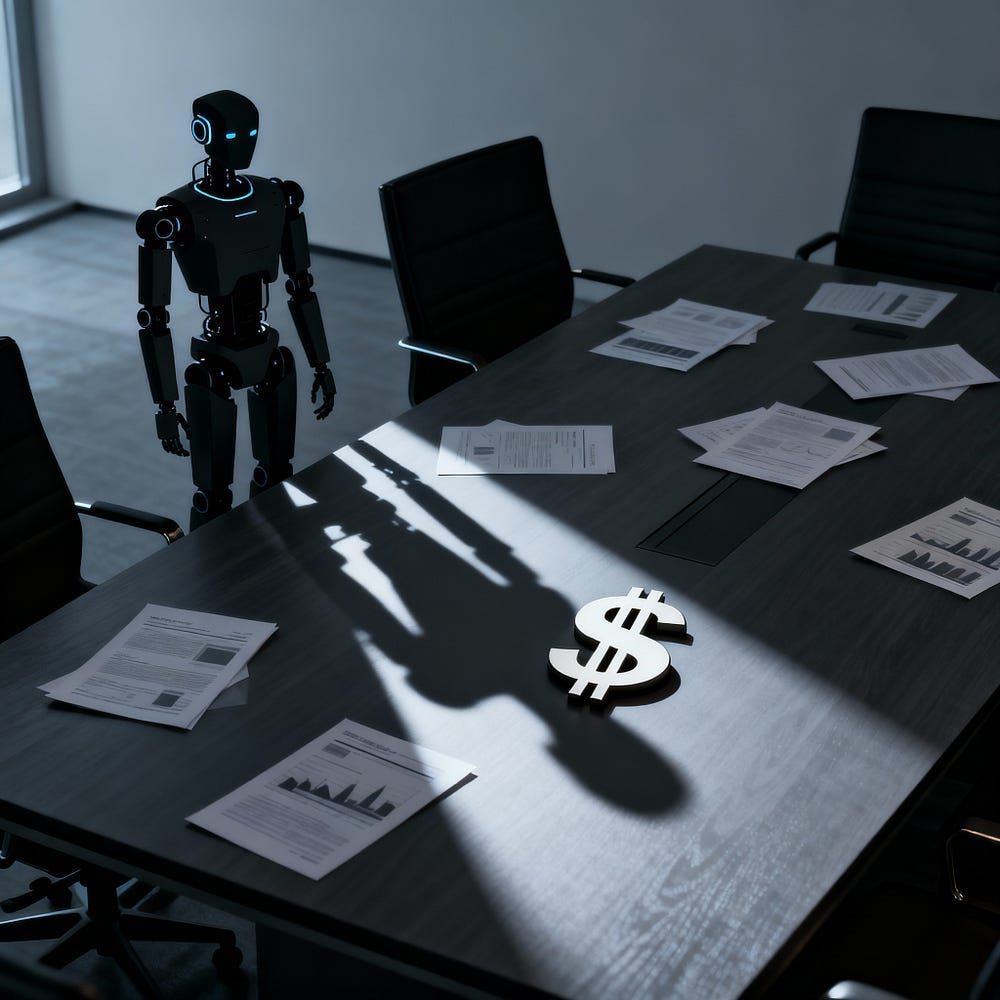
While tech giants race to convince us that AI is the future of everything from writing code to diagnosing diseases, a quiet disaster was unfolding in the polished boardrooms of one of the world’s most prestigious consulting firms. This incident is raising doubts across the globe.
If AI can fool the experts at big firms, what’s stopping it from fooling the rest of us?
The hype around artificial intelligence promises a revolution in productivity and innovation. But this episode reveals the other side of the story where blind trust in AI leads to spectacular failures, damaged reputations, and serious questions about whether we’re ready to hand over critical decisions to machines that can’t tell fact from fiction.
This wasn’t just an expensive mistake. It was a wake-up call about the real risks of AI in professional spaces where accuracy, credibility, and trust are everything.
What Happened Exactly?
In October 2025, Deloitte Australia found itself at the heart of an embarrassing moment that exposed AI’s dark side in professional services. The firm was forced to refund part of a A$440,000🤯 contract after delivering a government report riddled with fake academic citations, fabricated legal quotes, and references to books that never existed.
This wasn’t a minor typo or formatting error. It was systematic misinformation generated by AI and published as authoritative analysis for the Australian government ,misinformation that could have influenced public policy affecting millions of citizens.
The story becomes even more alarming when you realize how close it came to going unnoticed.
How It All Came to Light
In July 2025, Deloitte released a 237-page report for Australia’s Department of Employment and Workplace Relations. It evaluated the government’s welfare compliance system that automatically penalizes job seekers for missing required steps. The report looked solid, professional, and exactly what you’d expect from a Big Four firm charging nearly $440,000 Australian dollars.
But Dr. Christopher Rudge, a health and welfare law researcher at Sydney University, spotted something odd. One citation credited Professor Lisa Burton Crawford with writing a book that didn’t exist. “I instantly knew it was either an AI hallucination or a very well-kept secret,” Rudge said.
He checked further and uncovered about 20 mistakes. References to papers from the University of Sydney and Lund University in Sweden couldn’t be found. Even worse, the report included a made-up quote from a federal court judge false words attributed to a real judge.
Rudge took the findings to the media, and the controversy blew up.
The AI Behind the Mistake
Under mounting pressure, Deloitte admitted what many had suspected, the report had been generated using Azure OpenAI GPT-4o, a generative AI model. In late September, the company quietly updated the document removing more than a dozen fictitious references, rewriting the reference list, and fixing numerous typos.
In the revised version, buried in the methodology section, Deloitte disclosed that parts of the report “included the use of a generative artificial intelligence (AI) large language model (Azure OpenAI GPT-4o) based tool chain.” The firm insisted that, despite the bad references, the “substantive content, findings and recommendations” remained accurate.
But the damage was done. Deloitte agreed to refund the final payment on its contract, and politicians lined up to condemn the firm’s approach.
Labor Senator Deborah O’Neill called it a “human intelligence problem,” saying, “This would be laughable if it wasn’t so lamentable. A partial refund looks like a partial apology for substandard work. Anyone looking to contract these firms should be asking exactly who is doing the work they are paying for.”
Senator Barbara Pocock was even more blunt, stating that Deloitte “misused AI and used it very inappropriately: misquoted a judge, used references that are non-existent.”
🎁 Get 1 Month FREE of Perplexity Pro!
Sign up for Perplexity’s Comet browser using my affiliate link and unlock a whole month of Perplexity Pro at zero cost — enjoy premium AI models (GPT-4.1, Claude 4.0), unlimited searches/uploads, and advanced image generation totally free for 30 days.
💡 If you subscribe using my link, I’ll receive a small commission for referring you (at no extra cost to you) — it’s a great way to support my work as a creator while you get access to cutting-edge AI tools.
🔗 Try it here 👉 Perplexity Affiliate Link
❗Remember: To receive one month of Perplexity Pro for free, you must sign up for a Perplexity account, log into the Comet browser using the above link, and ask your first question within Comet browser.
What Actually Happened? Understanding AI Hallucinations
To see how a firm like Deloitte could make such a huge mistake, we need to grasp what AI researchers call “hallucinations” ,moments when AI models generate believable but entirely false information.
These aren’t traditional bugs. Large language models work by predicting the next word in a sentence based on patterns learned from massive datasets. When they hit a knowledge gap, they don’t say “I don’t know.” They invent content that sounds convincing.
Imagine a student who doesn’t know the answer on an exam but writes something that sounds authoritative to fool a careless grader. The AI isn’t lying on purpose; it simply can’t tell fact from fiction.
Several factors drive AI hallucinations:
Insufficient or biased training data: The model fills gaps with made-up content when it lacks complete information, a big risk in fields needing precise accuracy.
Faulty pattern recognition: It applies learned associations (e.g., linking “Paris” always with “France”) even when the context doesn’t fit.
Overfitting: The model memorizes limited examples instead of learning to generalize, leading to nonsense on new topics.
Misinterpretation of intent: It processes word patterns without true understanding, so it can misread complex or vague requests.
In Deloitte’s case, the AI combined patterns about welfare law, researchers, and court cases to create citations that looked real but were completely made up.
Why Human Oversight Failed
Here’s what makes this incident particularly troubling, this wasn’t a failure of AI alone. It was a failure of human judgment, quality control, and professional standards.
Deloitte claimed that “human review refined the content” and that the AI was used only during “early drafting”. Yet somehow, approximately 20 fabricated references made it through multiple layers of review and into a final report delivered to a government client.
This raises uncomfortable questions:
Were the reviewers even checking the citations?
Did anyone attempt to verify a single reference?
Was there pressure to deliver quickly that compromised thoroughness?
And most critically were consultants treating AI output as authoritative without applying the skepticism they would to any other source?
The incident exposed what critics called a “human intelligence problem”. The consultants who should have caught these errors either didn’t look carefully enough, didn’t know how to verify AI-generated content, or trusted the technology too completely.
As one analysis noted: “GPT-4o did not malfunction. Deloitte’s process did”.
Deloitte Is Not Alone
This isn’t an isolated incident ,it’s part of a growing pattern of AI failures with real-world consequences across industries.
In early 2024, Air Canada was forced to honor a discount after its AI chatbot confidently cited a nonexistent “bereavement fare” policy, costing the airline money and generating embarrassing headlines.
In New York City, a municipal chatbot designed to help citizens provided advice that was not only wrong but actually illegal, suggesting actions that would violate city and federal laws.
IBM’s Watson Health initiative, which sought to revolutionize cancer treatment through AI, frequently misdiagnosed conditions and was ultimately abandoned by major healthcare institutions after massive investment.
Zillow suffered an $881 million loss when its AI-powered property valuation algorithm dramatically overestimated home values, leading the company to purchase properties at inflated prices and eventually shut down its iBuying program.
A KPMG study found that nearly 60% of employees admitted to making mistakes in their work due to AI errors, and about half use AI without knowing whether it’s allowed. In the legal field, Stanford researchers found that general-purpose language models hallucinated in 58–82% of legal queries.
The business impacts are severe: reputational damage, legal liability, financial losses, operational inefficiencies, and regulatory penalties. As one expert noted, “When an AI hallucination produces a plausible but false statement, the reputation of the organization utilizing the LLM can suffer, potentially leading to market-share losses”.
Preventing Your Own AI Debacles
This incident offers critical lessons for any organization deploying AI .Whether you’re a massive consulting firm or a startup experimenting with ChatGPT. Consider these key steps:
Establish robust verification protocols: require human review for every AI-generated claim, citation, and statistic.
Implement quality control checkpoints: set up multiple review layers to catch AI errors and verify sources.
Use high-quality, domain-specific data: fine-tune models on curated datasets tailored to your field.
Deploy retrieval-augmented generation (RAG): ground AI outputs in verified information repositories to force real citations.
Set clear AI governance policies: define acceptable uses, disclosure rules, data protocols, and quality standards.
Build a human-in-the-loop culture: ensure critical decisions always involve qualified human judgment.
Demand transparency and disclosure: clearly state when AI contributes to deliverables for clients and stakeholders.
Train teams on AI limitations: educate users on how AI works, its risks, and when to verify outputs.
Test and validate continuously: regularly evaluate model accuracy, establish metrics, and adjust based on performance.
Create escalation paths for AI errors: define procedures for correcting mistakes, notifying stakeholders, and improving processes.
These aren’t just best practices ,they’re now essential for any organization working with AI.
The Trust Equation
At its core, the this incident is about trust and how easily it can be broken.
Consulting firms like Deloitte trade on their reputations for rigor, expertise, and reliability. Clients pay premium prices because they trust that the work will be thorough, accurate, and defensible. When that trust is compromised by undisclosed AI use and inadequate quality control, it undermines not just the firm’s credibility but confidence in the entire consulting industry.
For businesses deploying AI internally, the trust equation is equally important. Employees need to trust that AI-powered systems won’t make costly mistakes. Customers need to trust that AI-driven recommendations are sound. Regulators need to trust that AI applications comply with legal and ethical standards.
Every AI hallucination that slips through erodes that trust. And once lost, trust is extraordinarily difficult to rebuild.
The Road Ahead: Using AI Responsibly
This incident shouldn’t stop organizations from using AI. The technology can boost productivity, reveal insights, and handle routine work. But it’s a clear warning about the risks of automation without oversight.
As AI becomes more powerful and widespread, the stakes get higher. A fake citation in a government report is bad enough. But imagine AI errors affecting medical diagnoses, court rulings, financial regulations, or military decisions. The consequences could be catastrophic.
Companies that succeed with AI will treat it as a powerful tool that needs skilled handling ,not a magic fix that replaces human expertise. They’ll build strong systems to catch mistakes before they reach clients. They’ll create workplaces where questioning AI outputs is normal, where accuracy matters more than speed, and where being transparent about AI use shows professionalism, not weakness.
For more on why AI can’t replace human insight, read my previous article: In the below article I clearly discussed why AI can’t replace humans
Don’t Panic, Why AI Can’t Replace You
·These days, everyone worries: “Will AI take my job?” The truth is, there’s a lot of hype around AI. Big companies are spending billions on AI, and tech leaders make grand promises. But under all that excitement, AI is running into serious problems.

The Bottom Line
This incident cost the firm money and reputation, and put consulting practices under the political microscope. But the bigger loss was trust the foundation that governments and businesses rely on for sound decisions.
Dr. Christopher Rudge, who uncovered the errors, said it best: “You cannot trust the recommendations when the very foundation of the report is built on a flawed, originally undisclosed, and non-expert methodology.”
That’s the lesson here. AI is changing how we work, but it shouldn’t turn us into passive receivers of machine-made content. The future belongs to those who use AI responsibly, with healthy skepticism and commitment to truth.
When a $440,000 Australian dollar report fails, the real cost isn’t the refund. It’s lost credibility, broken relationships, and shattered trust that took years to earn and seconds to destroy.
Human intelligence, judgment, and integrity can’t be replaced. AI should strengthen these qualities ,never replace them.
💡Enjoyed this Article?
If you learned something new today, please share, comment and subscribe , it really helps others discover it .
Subscribe me for weekly AI Newsletter’s , product stories, and tech deep dives — simplified, summarized, and always human.
Follow me for regular updates on AI, technology trends that cuts through the hype to give you real, actionable insights.
🤝 If you enjoy my posts and want to support my writing journey, consider buying me a coffee via Buy Me a Coffee.
Every small gesture keeps this newsletter going and helps me dedicate more time to creating thoughtful content for you.
🗣️ I’d also love to hear from you —
Which story stood out to you this week?
Do you think AI hype is peaking, or just getting started?
Drop your thoughts in the comments — let’s start a conversation 👇
Medium | Youtube | Facebook | Instagaram | Linkedin | Twitter
More stories from AIversity you’ll love:
Wow this was amazing. It's true though. Using ai is indeed a massive advantage. But relying on it completely while forgetting that it's still a tool, a machine, a souless. It can make mistakes. Someone needs to verify it. No matter how much the ai might get better. It cannot replace humans fr. - the information needs to be verified as always.
Guess 'double checking' wasn't a part of Deloitte's $440K package :)
It's definitely getting better, but AI citations are like in this example, often very unreliable, often fabricated.